
Is your road ready for harvest?
Every fall, the same thing happens across rural Alberta: harvest season arrives, and suddenly the gravel roads that quietly did their job all summer are carrying more weight, more often, than at any other point in the year. This extra payload requires gravel road stabilization in advance of the harvest.
Grain trucks running full. Combines and grain carts moving back and forth on the same routes, day after day. Equipment coming and going at all hours to beat the weather. It’s a short window with an enormous amount of traffic — and your gravel roads feel every bit of it.
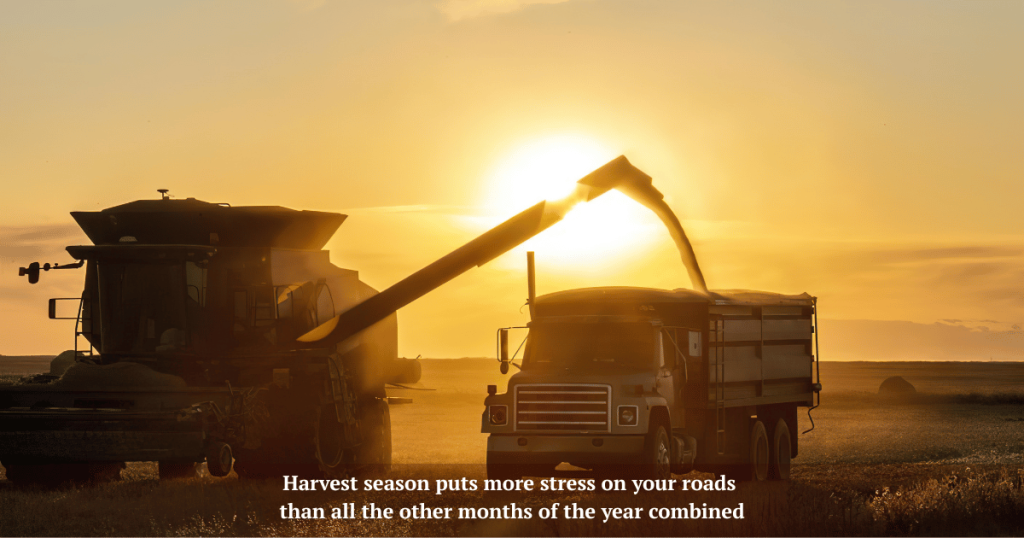
The Real Cost of Harvest Traffic
It’s easy to think of road wear as an inevitable part of the season. To some extent, it is. But the compounding stress of harvest traffic tends to show up in a few predictable ways:
- Rutting under repeated heavy loads, especially on routes trucks and equipment run over and over
- Washboarding, where the constant vibration of tires breaks the surface into a rippled pattern
- Surface breakdown on high-traffic sections — yard entrances, field approaches, grain cart paths
- Bigger repair bills once harvest wraps up and it’s time to regrade everything that took a beating
None of this is surprising. A fully loaded grain truck puts significantly more stress on a gravel or dirt surface than the light, occasional traffic those same roads see most of the year. The roads taking the brunt of it are often the ones you can least afford to lose access to — right when you need them most. This is where gravel road stabilization becomes a long term investment.
Why the Surface Matters More Than It Seems
A road that looks fine in August can start breaking down fast once harvest traffic hits it daily. The fine particles that hold a gravel surface together — the silt and clay that fill the gaps between larger aggregate — are what keep the road solid under load. When those particles lose their bond, the surface starts to give: ruts form, washboarding sets in, and every pass afterward makes it a little worse.
This is really a question of surface stability, not just traffic volume. A well-bonded surface can absorb a lot of heavy traffic before it starts to break down. A surface that’s already loose or poorly compacted will rut out much faster, even under the same load.
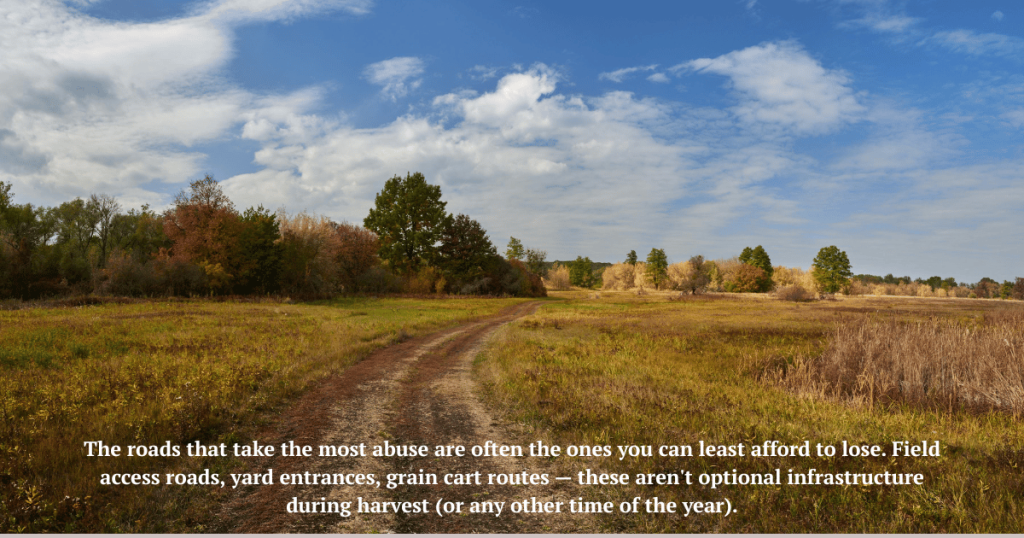
Where Soil Stabilization Fits In
This is where polyacrylamide (PAM) comes in. As a soil stabilizer, PAM works by binding fine particles together, improving the cohesion of the surface layer. A more stable, better-bonded surface holds up better under repeated heavy loads — which is exactly the kind of stress harvest traffic creates.
It’s not a magic fix, and it’s not a substitute for good grading and drainage. A road with poor shape or standing water problems needs those addressed first. But on a properly graded, well-compacted surface, PAM can help that surface stay intact through a season of heavy use, instead of breaking down after a few weeks of trucks and equipment.
Timing Matters
The best time to think about gravel road stabilization for harvest isn’t during harvest — it’s before. Once the trucks are rolling and the combines are in the field, there’s little room to pause for road maintenance. Getting ahead of it means:
- Grading and shaping the road properly before traffic picks up
- Compacting the surface so it’s ready to hold together under load
- Applying a stabilizer to help the surface resist the wear that’s coming
Farmers and rural property owners who treat this as pre-season prep — the same way you’d service equipment before the season starts — tend to spend a lot less time and money regrading after the fact.
A Season of Wear Doesn’t Have to Mean a Season of Repairs
Harvest is demanding enough without adding “road maintenance” to the list of things going wrong in October. A little preparation on the roads that carry the heaviest traffic can mean the difference between a road that holds up through the season and one that needs to be rebuilt before winter sets in.
At Polychem Solutions, we work with farmers and rural property owners across Alberta to match the right polymer to the job — because the right product, applied at the right time, on the right surface, makes all the difference.
Thinking about getting your roads ready before harvest traffic picks up? Give us a call at 780-360-1221 or visit polychemsolutions.ca to talk through your options.
Have questions about soil stabilization for your specific roads or property? Our team is happy to talk through what makes sense for your situation — every property and every soil type is a little different.