
Meat processing wastewater treatment has a reputation problem. To most people, it’s just “dirty water” — something to be cleaned up and discharged. In reality, it’s one of the more complex waste streams an industrial facility can produce, and treating it well requires understanding a lot more than how much water is flowing through the plant.
Here’s what actually makes it difficult — and what that means for the operators and environmental managers responsible for treating it
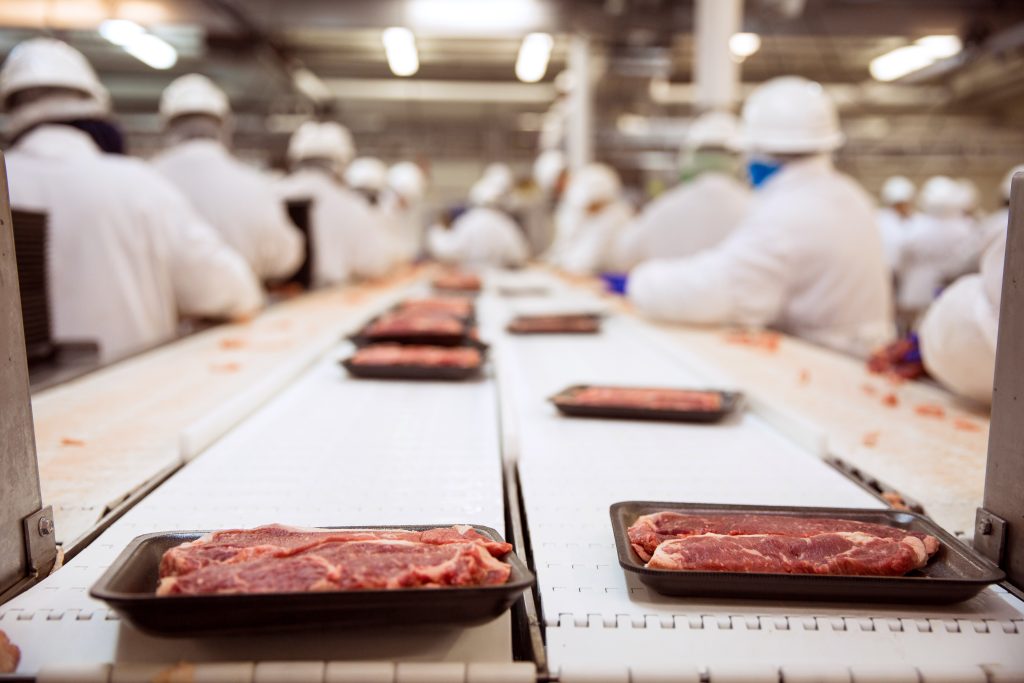
Every Day Is Different
Municipal wastewater is relatively predictable. Meat processing wastewater is not. Its characteristics shift throughout the day depending on production volume, the type of processing taking place, wash-down cycles, and even the time of day.
A facility running a full kill line at 8 a.m. sends very different water downstream than the same facility mid-afternoon during a wash-down cycle. That variability means a treatment system can’t be tuned once and left alone — it has to be able to respond to conditions that are constantly changing.
A Heavier Load Than Municipal Wastewater
Beyond the variability, there’s the sheer strength of the waste stream itself. Depending on the type of operation and the specific processing activities involved, meat processing wastewater typically carries far more organic material than typical domestic sewage.
That higher organic load is a big part of why treatment approaches borrowed from municipal systems often underperform in a meat processing setting. The water isn’t just harder to treat — it’s starting from a much heavier baseline.
What’s Actually in the Water?
Meat processing wastewater is a mixture of several components, each of which behaves differently once treatment begins:
- Blood — high in organic content and slow to break down
- Fats, oils & grease (FOG) — prone to floating, coating equipment, and emulsifying
- Proteins — can stabilize fine particles and resist settling
- Suspended solids — variable in size and density
- Cleaning chemicals — introduced during wash-down, which can interact with everything else
- Organic matter — broadly, everything contributing to biological oxygen demand (BOD)
No single treatment step handles all of these equally well, which is part of why meat processing systems are typically multi-stage rather than a single tank or process.
Why Won’t Wastewater Solids Settle?
A natural instinct is to let solids settle out. In practice, that’s often slow and unreliable. Many of the particles in meat processing wastewater are extremely small. Some float, some sink, and some simply stay suspended indefinitely. Fats and cleaning chemicals can emulsify fine particles further, keeping them dispersed instead of letting them clump together.
Without help, separation can take far longer than a facility can afford — which is where treatment chemistry comes in.
Coagulant vs. Flocculant: The Role of Treatment Chemistry
This is the point where coagulants and flocculants become essential rather than optional.
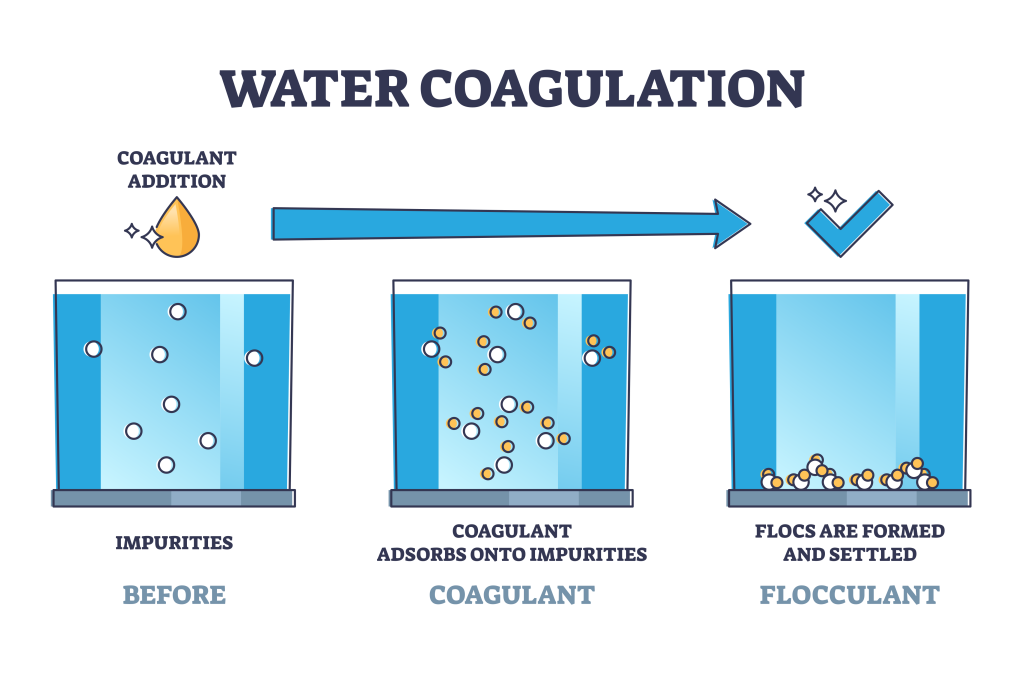
Coagulants work first, neutralizing the charges that keep fine particles apart and destabilizing them.
Polyacrylamide (PAM), used as a flocculant, then bridges those destabilized particles together into larger, heavier flocs.
Those larger flocs are far easier to remove — whether through gravity settling, dissolved air flotation (DAF), or dewatering equipment. Get the chemistry right, and a system that was struggling to separate solids can suddenly perform the way it was designed to.
How to Improve DAF Performance and Reduce Sludge Handling
Every facility has its own priorities, but the goals we hear most often from operators and environmental managers are fairly consistent:
- Improved solids removal
- Better DAF performance
- Clearer treated water
- Reduced sludge handling challenges
- More consistent treatment, even as production conditions shift
Notice that none of these are about a specific product. They’re operational outcomes — and the right chemistry program is a means to those outcomes, not the goal itself.
Polymer Selection for Wastewater Treatment
Because no two meat processors generate exactly the same wastewater, no single polymer works everywhere. The right choice depends on a facility’s specific wastewater characteristics, solids concentration, existing treatment process, equipment, and operating objectives.
That’s why polymer selection should be a diagnostic process, not a guess. Jar testing, an understanding of the existing treatment train, and a look at where the system is underperforming all inform the right recommendation — and get facilities to consistent results faster than trial and error.
Frequently Asked Questions
What chemicals are used to treat meat processing wastewater? Most systems rely on a coagulant to destabilize fine particles, followed by a flocculant — typically polyacrylamide (PAM) — to bind those particles into larger flocs that can be removed by settling, DAF, or dewatering. The specific products and dosing depend on the facility’s wastewater characteristics.
Why does meat processing wastewater contain so much FOG? Fats, oils, and grease (FOG) come from the meat and fat trim itself, along with wash-down water. FOG tends to float or emulsify rather than settle, which is why it needs targeted treatment rather than standard clarification.
Is meat processing wastewater stronger than municipal sewage? Generally, yes. Depending on the operation and processing activities involved, it typically carries a meaningfully higher organic load than domestic sewage, which is part of why municipal-style treatment often falls short.
How do I know which polymer is right for my facility? The right polymer depends on wastewater characteristics, solids concentration, existing treatment equipment, and operating goals. Jar testing against your actual wastewater is the most reliable way to confirm a fit before committing to a full-scale program.
The Polychem Difference
At Polychem Solutions, we combine Alberta-based inventory with technical polymer expertise. Rather than simply supplying polymer, we work with facilities to identify the solution best suited to their specific wastewater conditions — backed by over 20 years of experience, technical support, and flexible supply options.
If your facility is dealing with inconsistent DAF performance, sludge handling headaches, or treated water that’s harder to hit spec on than it should be, we’d be glad to talk through what’s actually happening in your system.
Reach out at polychemsolutions.ca or 780-360-1221.