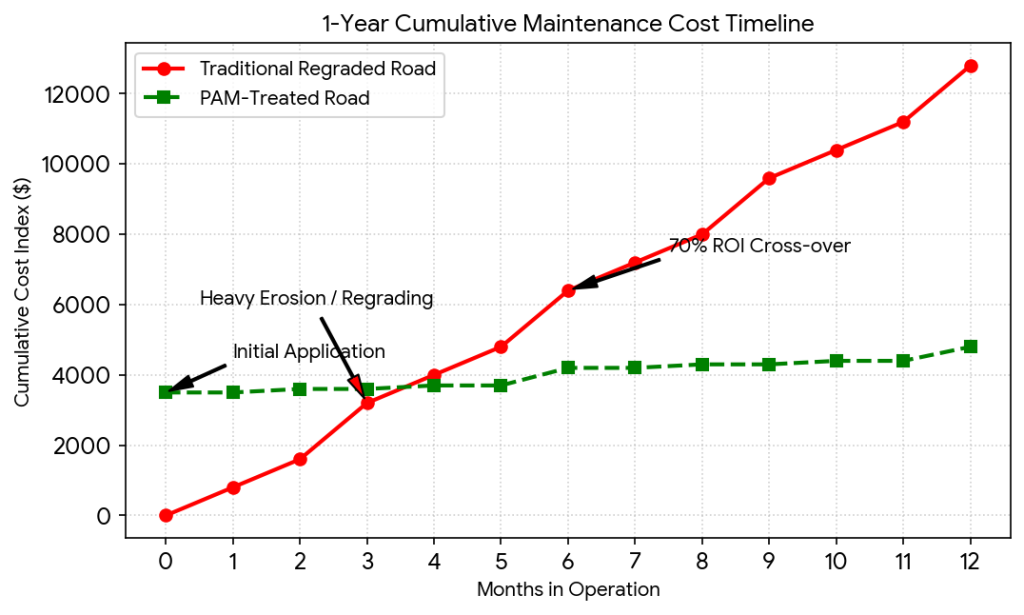
Mud Season Doesn’t Have to Mean Stuck Trucks and Washed-Out Roads
PAM for Farm Roads Series, Post 2 of 3
Part 1 – Dust Control
Part 3 – Application, Cost & Maintenance
If dust is your farm road’s summer personality, mud is its spring and fall personality — and it’s the meaner of the two. A dry, dusty road is annoying. A rutted, half-washed-out road can strand a feed truck, delay calving checks, or turn a five-minute drive to the back pasture into a forty-minute detour around a section that’s currently more creek than road.
This is post two of our series on using polyacrylamide (PAM) on farm roads. Last time we covered dust; this time it’s water’s turn. Because the same underlying problem drives both, and the same fix addresses both.
Why rain wrecks unpaved roads
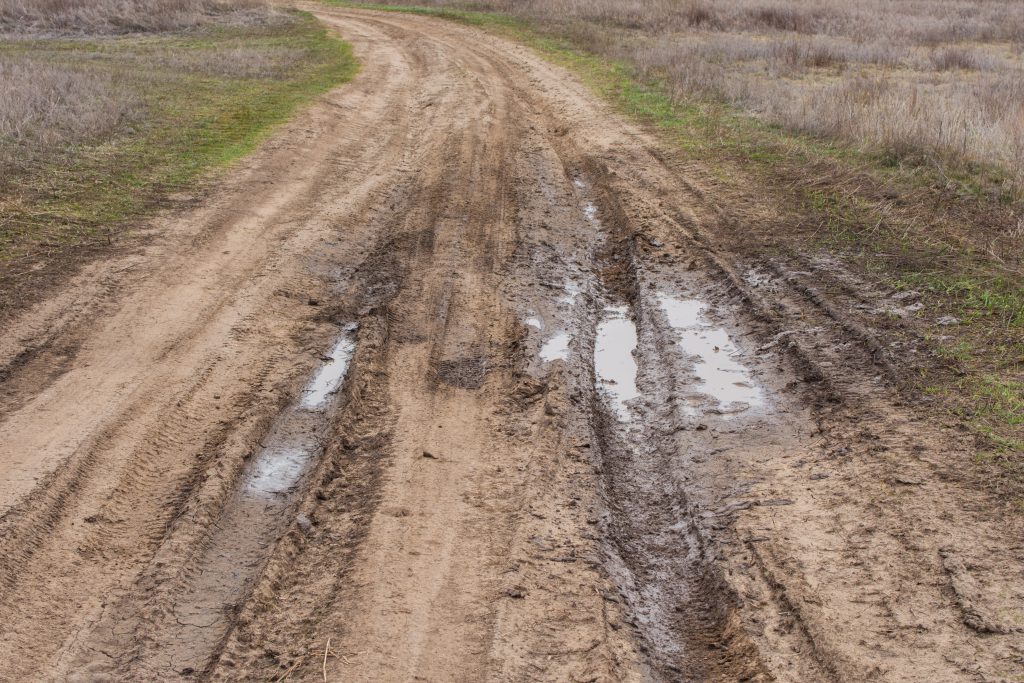
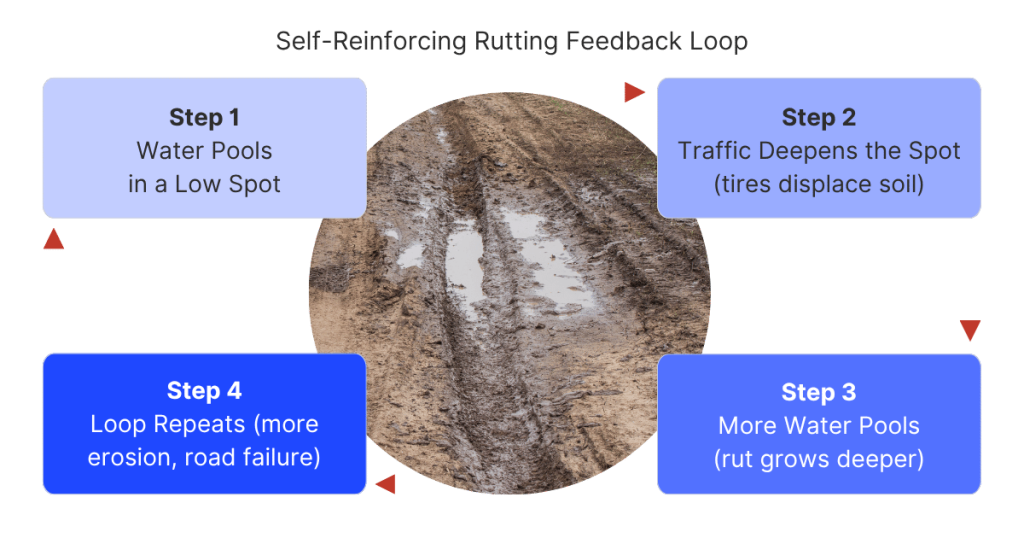
An unpaved road surface is a mix of gravel, sand, and fine particles (silt and clay) that fill the gaps and lock everything together, when it’s dry and undisturbed. Add water, and that changes fast. Water gets between particles, reduces the friction holding them together. And the road surface goes from “compacted” to “soft” in the time it takes a storm to roll through. Once it’s soft, every tire pass pushes fines sideways and down. Instead of the road staying put, you get ruts. Ruts channel the next rain into the same low spots, which get deeper, which channels more water, and so on. It’s a feedback loop that ends with a road that needs regrading — sometimes more than once a season.
There’s a second cost that’s easy to miss. Erosion doesn’t just wreck your road, it moves the material somewhere else, usually into the nearest ditch, culvert, or waterway. Depending on where you farm, sediment-laden runoff from unpaved roads can be a genuine water-quality issue, not just a housekeeping one.
What PAM changes
The same bridging action that keeps dust particles bound together at the surface also keeps them bound together when they’re wet. PAM doesn’t waterproof the road; it’s not a sealant, and that’s actually the point. A hard sealed crust would just shed water fast and erode at the edges. Instead, PAM increases the cohesion between soil particles. This way the road surface holds its structure under saturation, resisting the detachment and displacement that turns rain into ruts.
Practically, that means water still infiltrates reasonably well (less standing water, less sheet flow racing downhill picking up sediment as it goes). The fines stay put instead of washing off with it. Aggregate stability (how well soil clumps resist breaking apart when wet) is one of the more measurable improvements from PAM treatment in agricultural and erosion-control research. And it’s the exact property that determines whether your road surface survives a downpour intact or ends up in the ditch.
What that looks like on an actual farm road
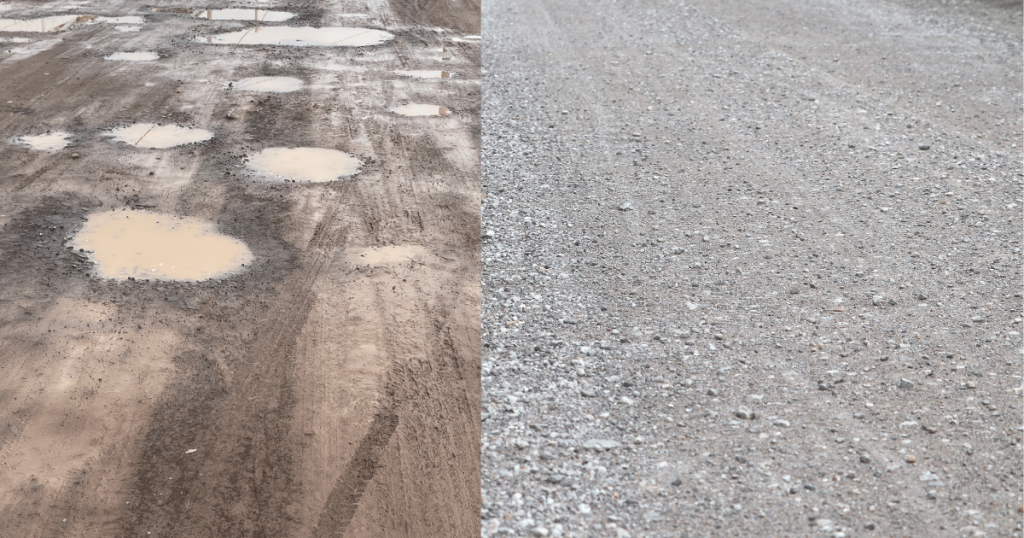
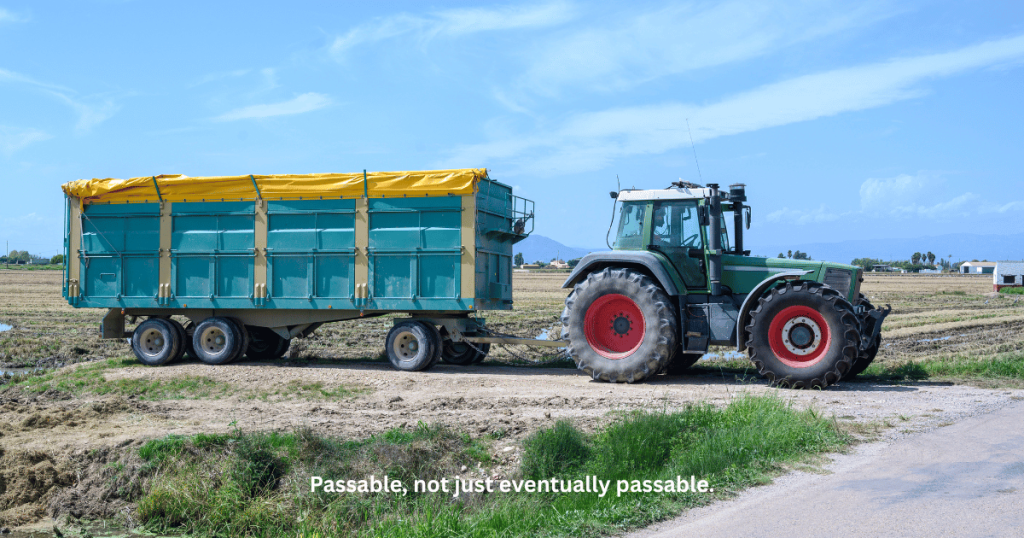
Take a farm lane that runs through a low, poorly-drained stretch. The road always seems to hold water a day or two longer than everywhere else. Untreated, that stretch turns into axle-deep mud within a day or two of steady rain, and it stays rough for weeks after, even when things dry out, because the rutting doesn’t heal itself. Treated with PAM ahead of the wet season, the same stretch handles the same rainfall with dramatically less rutting. Traffic can keep moving through it during and shortly after rain instead of forcing a detour, and the road doesn’t need a full regrade once things dry out.
That matters most exactly when you need the road most: during calving, lambing, harvest, or any other time-sensitive operation. “The road’s out for two weeks” isn’t an acceptable answer any time of the year.
Beyond the road itself
Reduced erosion means reduced sediment reaching drainage ditches, culverts, and any nearby waterway. If your operation deals with runoff regulations, buffer requirements, or you just don’t like watching your gravel end up in the creek, that’s a meaningful side benefit layered on top of the practical one of keeping the road usable.
Where this fits in the series
Dust control and rain resilience come from the same mechanism — PAM binding fine soil particles into stable aggregates — which is part of why treating a road for one tends to help with the other. The last piece of this series covers what it actually takes to get PAM onto your road: application methods, rough dosing, timing, and what it costs relative to the regrading and regraveling you’re probably already paying for.